The answer
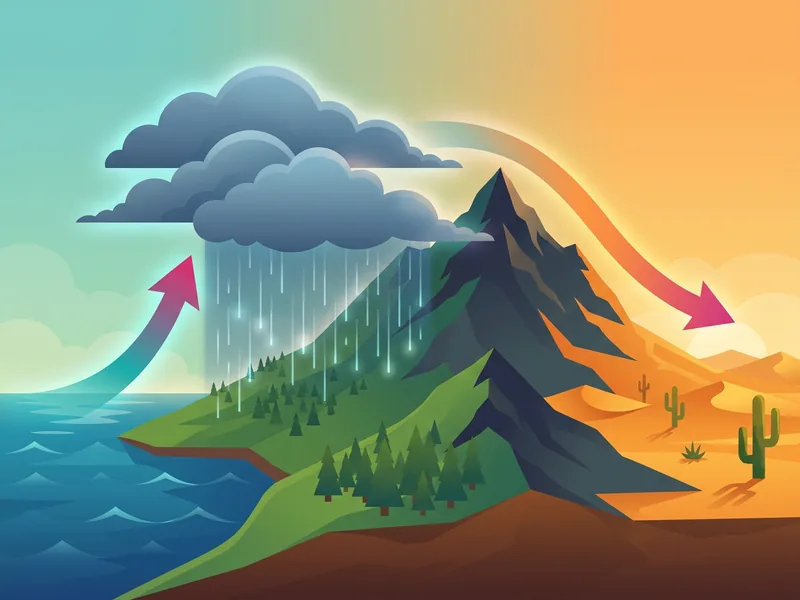
Rivers carry tiny amounts of dissolved minerals from rocks into the sea, and evaporation takes the water back out but leaves the salt.
Rain picks up a little carbon dioxide from the air, which makes it very slightly acidic. Over time, that rain wears away rocks and dissolves some of their minerals, like sodium, calcium and magnesium.
Streams and rivers carry those dissolved minerals to the ocean. River water still tastes fresh, because the amount in it is tiny.
In the ocean, the Sun evaporates water, which rises as pure water vapour and later falls as rain. The minerals don't evaporate, so they stay behind. Over many millions of years they have built up.
Today seawater is about 3.5% salt: about 35 grams in every kilogram. The most common pieces are chloride and sodium, the two parts of table salt. Hydrothermal vents on the sea floor add some minerals too. The saltiness has stayed roughly steady for a very long time, because salt also leaves the water, for example by settling into sediments on the sea floor.
Go deeper
Why? Why aren't rivers and lakes salty too?
Most rivers and lakes have water flowing out as well as in, so the minerals keep moving on to the sea. Lakes with no outlet, like the Great Salt Lake and the Dead Sea, lose water only by evaporation, so they get extremely salty.
Why? Where does the chloride come from, if rocks have little of it?
Much of the ocean's chloride came from gases released by volcanoes over Earth's history, which dissolved in water. Volcanic activity under the sea still adds some today.
Why? Why can't we drink seawater?
Your kidneys can only make urine that is less salty than seawater. Drinking seawater makes your body use more water to get rid of the salt than you took in, so you end up thirstier.
Keep wondering

Sources
- Why is the ocean salty?, NOAA Ocean Service
- Why is the ocean salty?, USGS