The answer
A day would last a year, Earth would lose its bulge, and the oceans would flow toward the poles, leaving a giant continent around the equator.
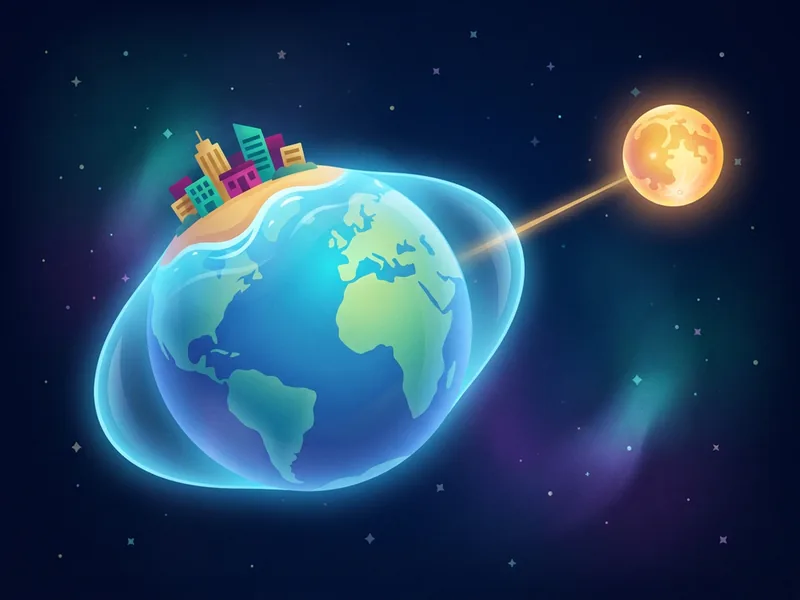
Earth spins once about every 24 hours. Because of that spin, the equator moves fastest, about 1,670 km/h, and the spin flings it outward a little: Earth is about 43 km wider across the equator than from pole to pole.
If the spin stopped suddenly, everything not bolted to the bedrock (air, oceans, people, buildings) would keep moving east at up to 1,670 km/h. That's what physics says objects in motion do. It would be a catastrophe, but nothing in nature could stop Earth that fast.
So imagine it slowing down gently over a very long time. Without the spin, nothing would hold up the bulge at the equator. The solid Earth would slowly settle toward a rounder shape, but water moves freely, so the oceans would flow toward the poles. Computer models of this show two huge polar oceans and one enormous continent wrapped around the middle.
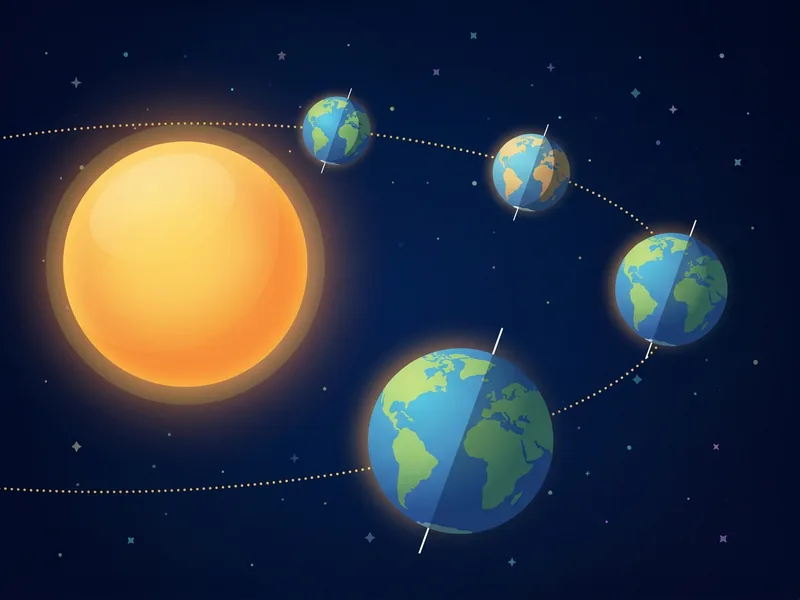
Days would last a year. With no spin, the Sun would move across the sky only because Earth travels around it, so most places would get about six months of day and six months of night. Scientists aren't sure exactly what the weather would be like, but the day side would bake and the night side would freeze, and winds would no longer curve the way they do now.
What we know and what we don't
What physics tells us
- The equator moves at about 1,670 km/h; a sudden stop would send air and unattached objects sliding east at that speed.
- Without spin, one day would last about one year.
- Without spin, the equatorial bulge would no longer be held up, and the oceans would move toward the poles.
Scientists aren't sure
- The exact shape of the new oceans and continent comes from computer models.
- What the weather and climate would be like, and what would happen to Earth's magnetic field.
Go deeper
Why? Why don't we feel Earth spinning?
Because the spin is smooth and steady, and everything around you, including the air, moves with you. You only feel changes in speed, like when a car brakes.
Why? Would we lose our magnetic field?
Earth's magnetic field is made by moving liquid iron in the outer core, and the spin helps organise that motion. Scientists think the field would likely get weaker or messier, but they aren't sure. Without a strong field, more radiation from the Sun would reach the upper atmosphere.
Why? Is Earth's spin slowing down?
Yes, very slowly, because the Moon's tides act like brakes. Days get about 1.7 thousandths of a second longer every century. Hundreds of millions of years ago, a day was only about 22 hours.
Keep wondering
Sources
- Earth Fact Sheet, NASA Goddard (NSSDCA)
- What would happen if Earth stopped spinning? (Witold Fraczek), Esri ArcUser, 2010